

Navigate
Products
Download
eShop
Upgrade
Overview
Training
Support


Navigate
Products
Download
eShop
Upgrade
About
Training
Support


Managing colors within an embroidery design is a critical task. Effective color control ensures the design appears correctly on screen and optimizes the number of thread changes and trims during production. The quantity and sequence of colors directly affect the final embroidery quality and total production time. Therefore, Studio provides comprehensive tools for analyzing color layouts and adjusting specific colors.
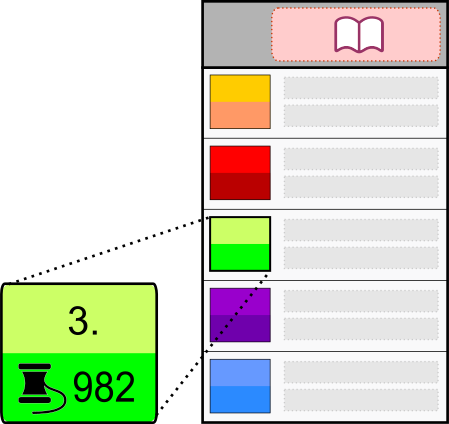
The Thread List provides a streamlined, chronological color sequence generated automatically from the design at any stage of the digitization process.
When a design is opened or created, the Thread List maps the generic color data of the file to a specific manufacturer's range, known as the Default Thread Catalog. This ensures that the digital on-screen representation accurately aligns with physical thread specifications for production. The Thread List, working in tandem with the Palette located on the same tab, serves as the primary interface for comprehensive color management.
The Thread List fulfills four critical technical roles:
1. Simplified Overview: It provides a condensed list of thread changes in their exact stitching order, regardless of the number of individual vector objects assigned to each color.
2. Internal Color Access: Complex objects like Sfumato or Appliqué contain "inner" colors usually managed via the Parameters window. The Thread List allows for a faster high-level overview and direct editing of these internal layers.
3. Catalog Matching: It facilitates the precise conversion of digital values to real-world thread codes from the chosen Default Catalog.
4. Global Selection and Editing: It allows for the universal modification of a specific color. Changing a color entry here updates every instance of that color across the entire design, even if the color is embedded within complex objects or distributed across multiple consecutive objects.
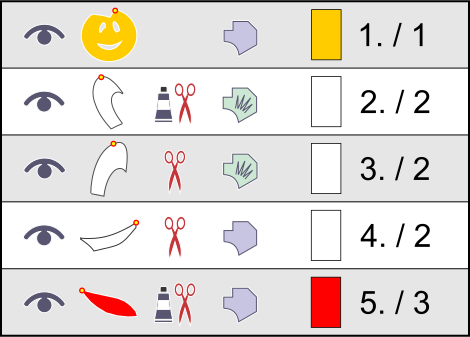
The Object Inspector list provides color data for individual objects. The small rectangular box in each row of the Object Inspector serves as a color sample for that object. If a row contains grouped objects, the box displays the color of the first object in that group.
The number indicated by the arrow denotes the color sequence. Colors are numbered in their order of occurrence within the design. In this example, the list contains four distinct colors; objects #2, #3, and #4 share the same color. Utilizing the color sequence allows for the optimization of thread changes on the embroidery machine.
While all vector objects possess a color property, this property is not applicable to specific object types such as carvings and openings (holes).
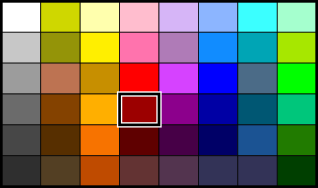
The Palette represents the available color pool for the project. Newly created objects automatically adopt the color of the currently highlighted cell (maroon, in this example).
The Palette supports the following operations:
1. Primary Click: Highlights a specific cell in the palette.
2. Secondary Click: Opens the palette's pop-up menu.
3. Long-tap: Opens the color mixing window to define a new color.
4. Drag-and-Drop (Cell to Cell): Copies a color from one cell to another.
5. Drag-and-Drop (Palette to Object): Changes the color of target objects in the Work Area or the Object Inspector.
Additionally, palettes can be saved or loaded via Main Menu > Design > Export/Import > Color Palette.
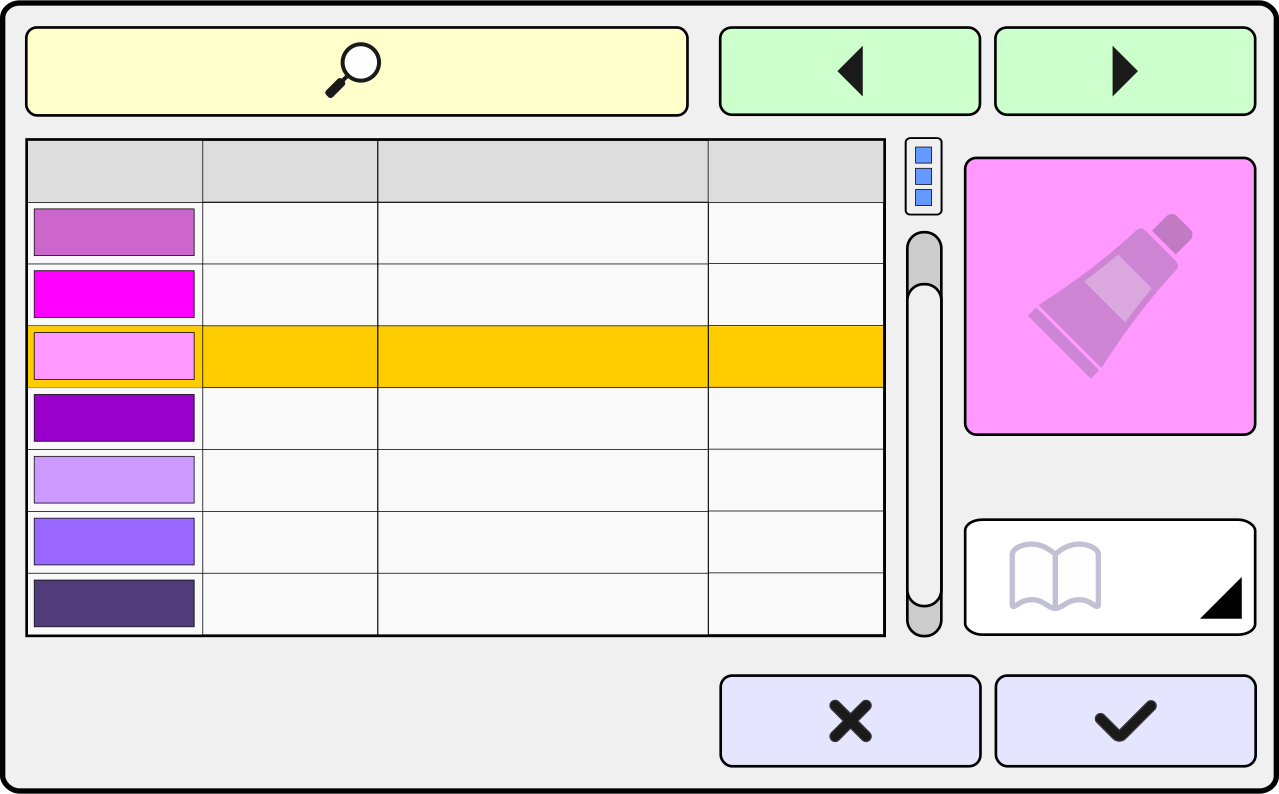
To achieve realistic previews and streamline the creation of documentation in the main Embird program, users may digitize using actual thread colors. Studio includes a Thread Catalog tool that provides access to predefined color sets matching commercial thread brands.
The Thread Catalog is accessible via Main Menu > Object or the context-sensitive pop-up menu. This menu appears when right-clicking selected objects in the Work Area or Object Inspector. It can also be accessed via the Pop-Up button.
By default, the Thread Catalog uses the color of the first selected object as a reference. Threads most closely matching this color are automatically prioritized at the top of the list.

The Color Picker tool, available in the pop-up menu, is used to sample colors directly from an underlying raster image. For images with visual noise, utilizing the 3x3 or 5x5 pixel average sampling options can improve color accuracy.
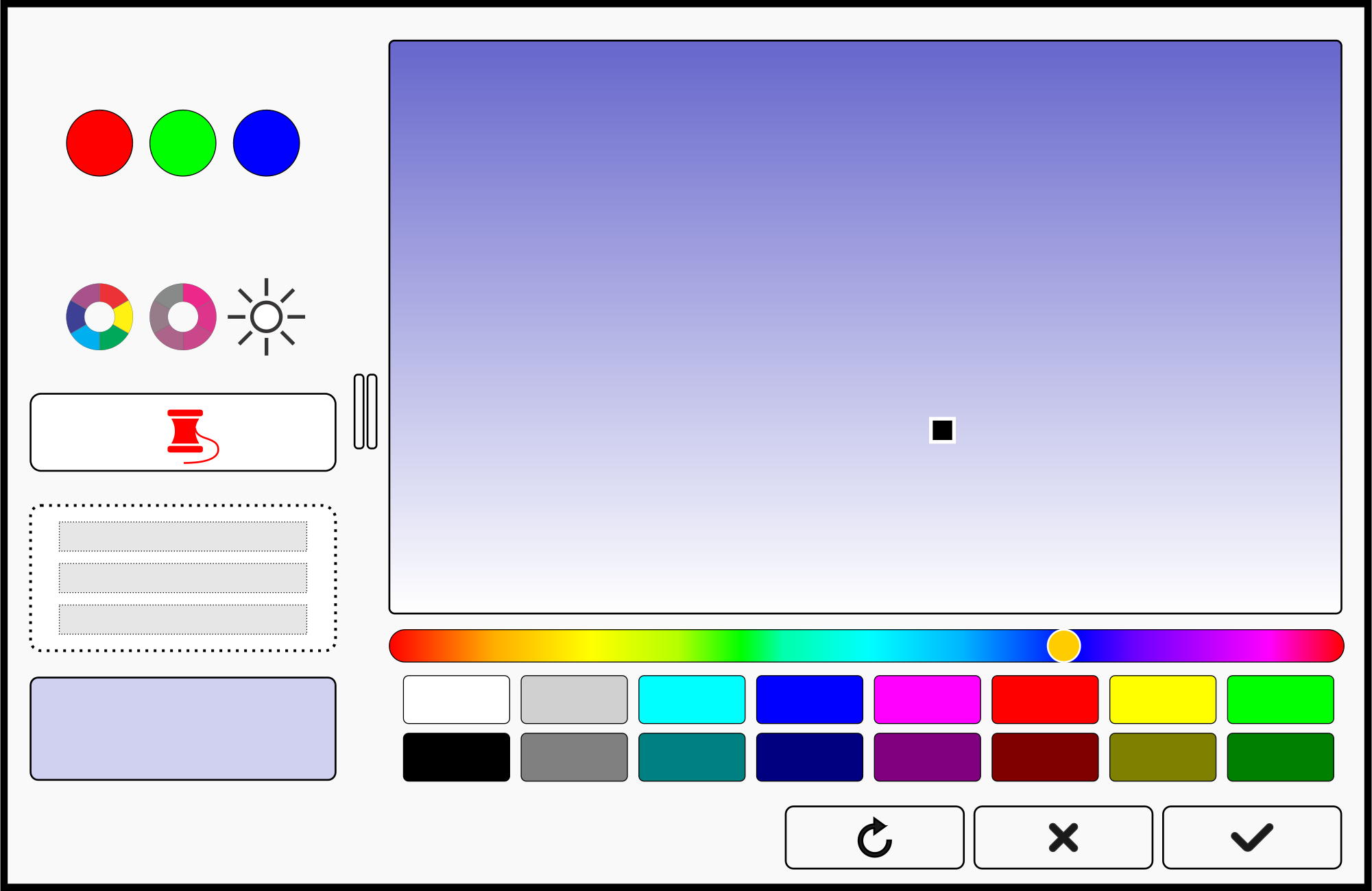
The Color Mixer is a dedicated panel for defining custom colors using RGB or HSL components, or by selecting from a color plane. A specialized version of this tool is available for specific embroidery objects or stitches, allowing users to select colors from thread catalogs and save them as swatches for future use.