

Navigate
Products
Download
eShop
Upgrade
Overview
Training
Support


Navigate
Products
Download
eShop
Upgrade
About
Training
Support


A raster image frequently serves as the foundation upon which an embroidery design is constructed in Studio. The image is imported into the Work Area to function as a template for digitizing. As all digitizing tasks are performed on top of the image layer, it is commonly referred to as a background image.
While utilizing a background image is highly beneficial for accuracy, it is not mandatory. You may leave the image layer empty and create a design on a clean background if required.
To import an image into the background layer beneath your design, use the Main Menu > Image > Import command.
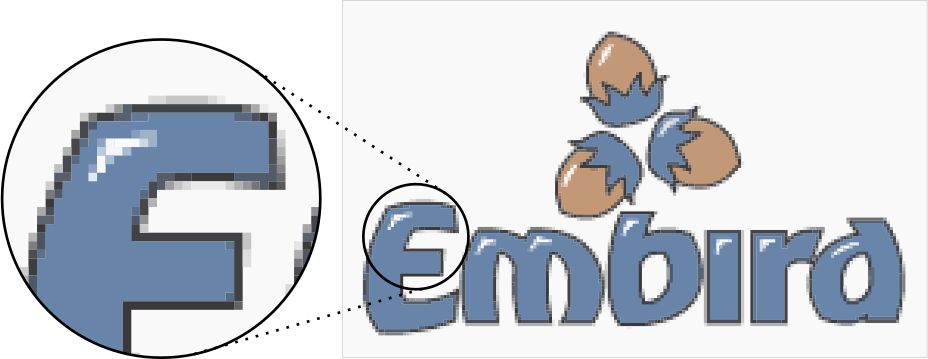
A raster image is composed of square colored dots known as pixels (or picture elements). These pixels generally do not possess an inherent physical size and are rendered differently across various devices. When used as a digitizing template, a physical scale must be assigned to these pixels to ensure the resulting design maintains the correct dimensions. Studio applies a fixed ratio between image pixels and design dimensions: 10 pixels equal 1 millimeter, which is equivalent to 254 pixels per inch.
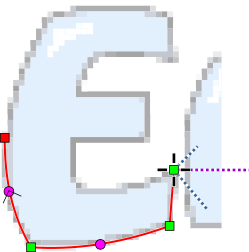
Digitizing embroidery objects involves the creation (via manual or automatic methods) of vector objects defined by control nodes positioned over the raster layer. Studio then populates these digitized vector boundaries with stitches, which constitute the final embroidery product.
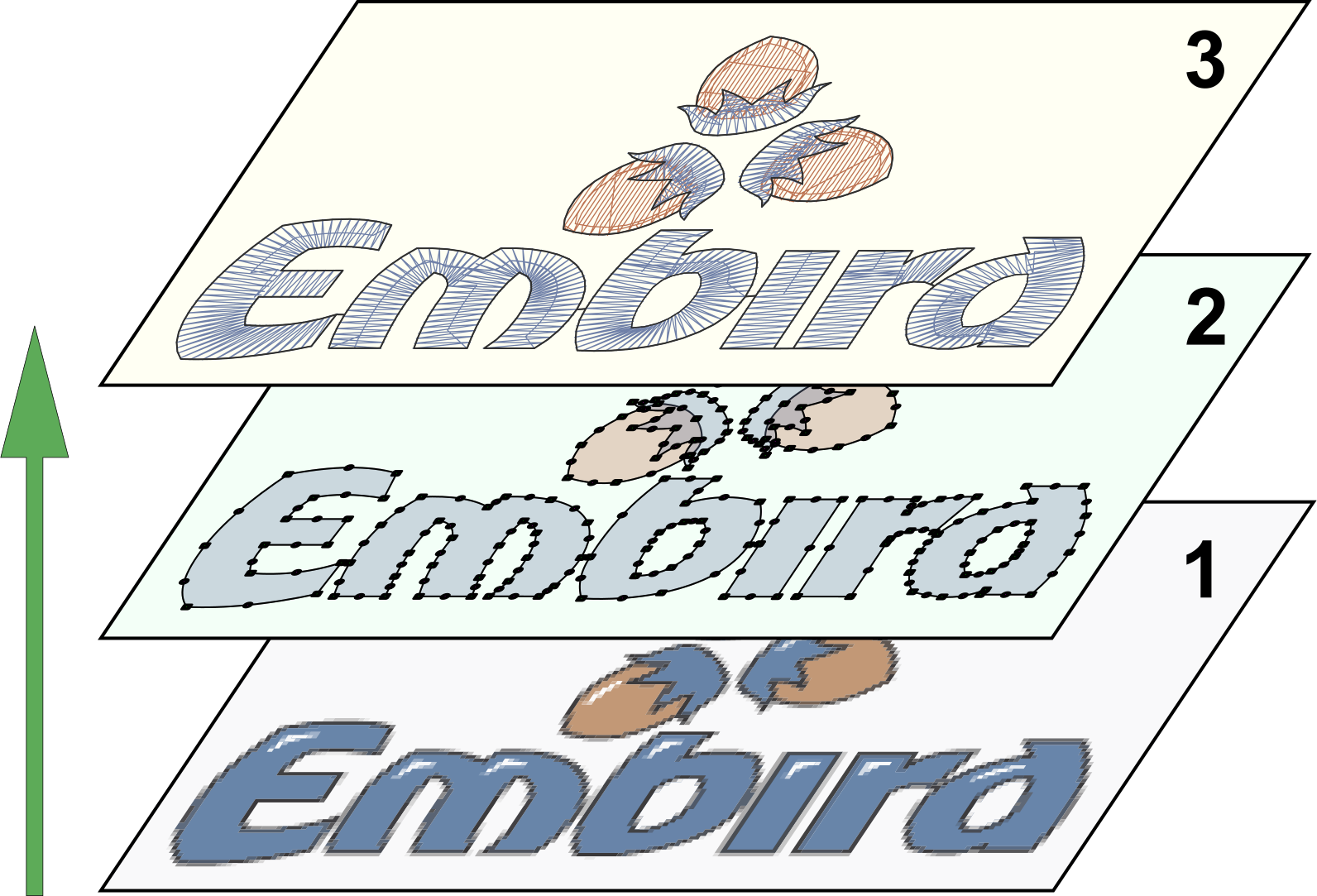
The layer structure of an embroidery design in Studio: 1. raster image (optional), 2. digitized vector objects, and 3. the final stitches. When saving a design, all layers are preserved within the same file.
An imported raster image often requires adjustments before it is suitable for digitizing. Studio includes specialized tools for trimming and enhancing raster images to optimize them for the workspace.