Navigate
Products
Download
eShop
Upgrade
Overview
Training
Support


Navigate
Products
Download
eShop
Upgrade
About
Training
Support


The Sfumato tool generates stitches based on an image imported into the background of the work area. The user defines the boundaries for specific areas, and the software translates the photo's tonal values into stitches based on assigned parameters.
This tutorial provides a step-by-step guide for digitizing a photographic portrait for machine embroidery using the Sfumato Stitch tool in Embird Studio NEXT. You will learn how to import a photo, outline key facial features such as the mouth and hair, adjust color parameters for optimal thread density, and save the final design. This page also showcases examples of Sfumato designs using various color palettes, including multicolored, sepia, and grayscale.
Detailed descriptions of adjustable Sfumato parameters can be found in the Parameters - Sfumato chapter.
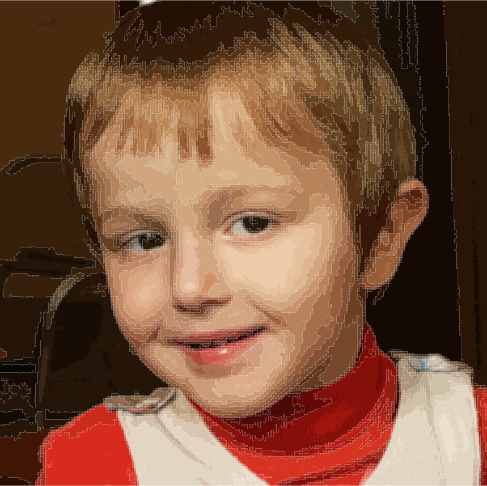
To begin, use the Main Menu > Image > Import command to place a photo into the Work Area.
The resolution of your raster image determines the final size of the embroidery design. The standard ratio is 100 pixels per centimeter (approximately 254 pixels per inch). For example, a design intended to be 10 centimeters (3.94 inches) high requires an image height of 1000 pixels. Because the underlying image is sampled every time stitches are generated, a Sfumato object cannot be resized independently of its source raster image.
Ensure the imported photo adheres to the correct resolution: 100 pixels per centimeter (254 DPI) for the intended design size.

Select the Sfumato Tool to draw the initial area for stitch generation. Each object can contain up to 9 shades of a chosen "basic color." In this tutorial, the face is digitized as the first object. Create a slight overlap into the hairline to ensure seamless coverage. The face will eventually be filled with skin-tone shades.
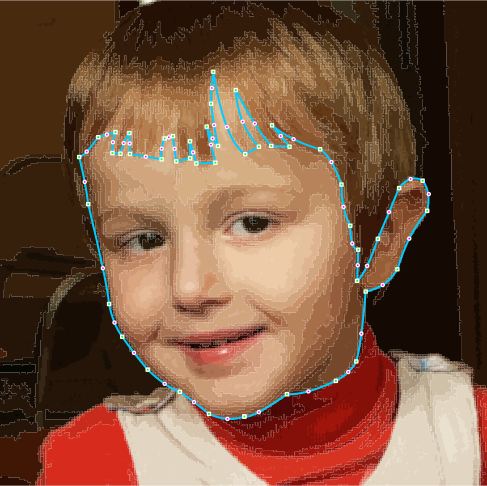
The vector outline of the face is digitized directly over the raster template.

To use a different color for the mouth, select the Opening Tool to cut a hole in the face object.
Technical Note: In addition to Openings, Sfumato objects can incorporate Carvings.
Carvings are vector lines or curves drawn immediately after a Sfumato object. They are used to emphasize subtle edges or details that may not be clearly visible in the photo-to-stitch conversion.
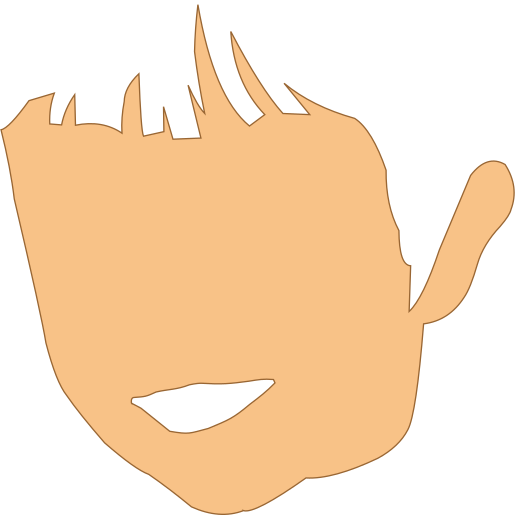
Face object with a mouth opening. Stitches have not yet been generated.
Select the face object in the Work Area or Object Inspector and right-click to open the pop-up menu. Select Edit to enter node editing mode; the Sfumato parameters will appear in the Main Control Panel.
The Mode combo box at the top of the panel allows you to navigate three working modes:
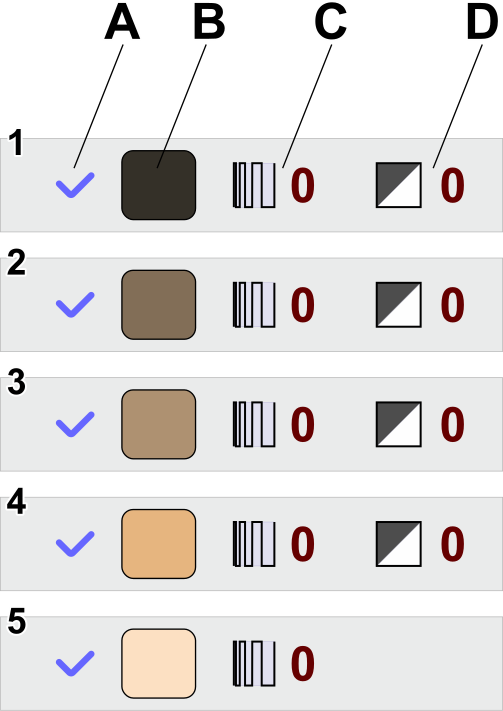
Choose the Pick Color from Image tool and select a skin tone from the photo to set the Basic Color. Studio will automatically generate 5 shades of this color.
Note: Use the combo box to switch to the Shades Layout Preview to see how parameter adjustments impact the final stitch layout in real-time.
The Color tab displays 5 default shades. You can enable additional shades (up to 9) if the design requires higher tonal complexity.
To soften transitions, you can decrease the Contrast control. Once settings are finalized, click Generate Stitches to process the object.
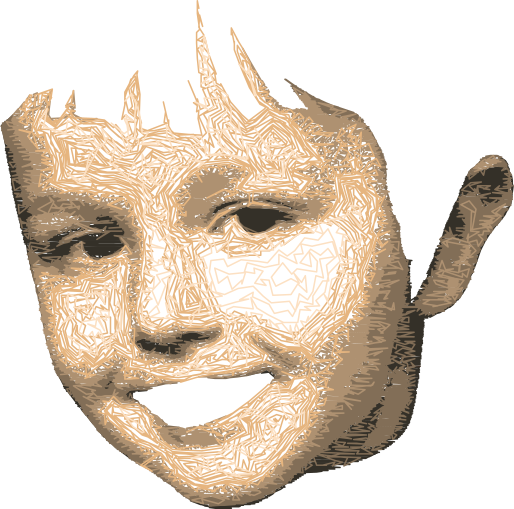
The first Sfumato object after generating 5 shades derived from the skin-tone basic color.
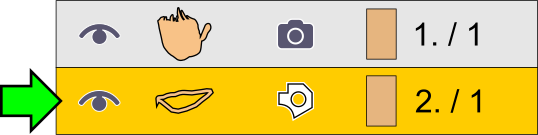
In the Parts Inspector, select the mouth opening. Use Main Menu > Convert > Fill & Sfumato > Create Fill from Opening to transform the void into a new Sfumato object.
Because the mouth is a small detail, 5 shades may be excessive. You can optimize the design by disabling 1 or 2 shades using the shade switches (A).
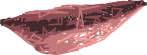
The mouth Sfumato object rendered with 4 shades of pink.
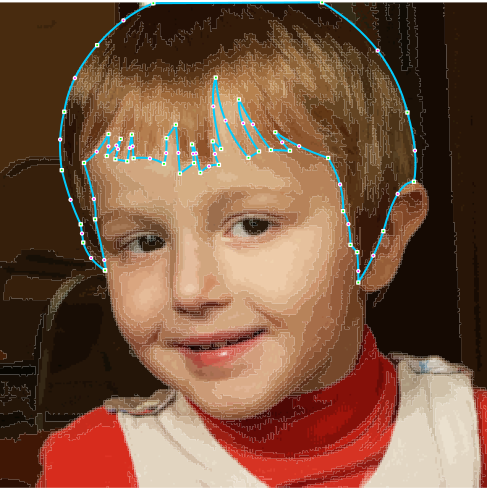
Digitize the hair area using the same method as the face. Select a suitable hair color in the Parameters window. Use the Shade Preview and adjust the Shade Thresholds (D) to achieve a natural tonal balance across the hair texture.
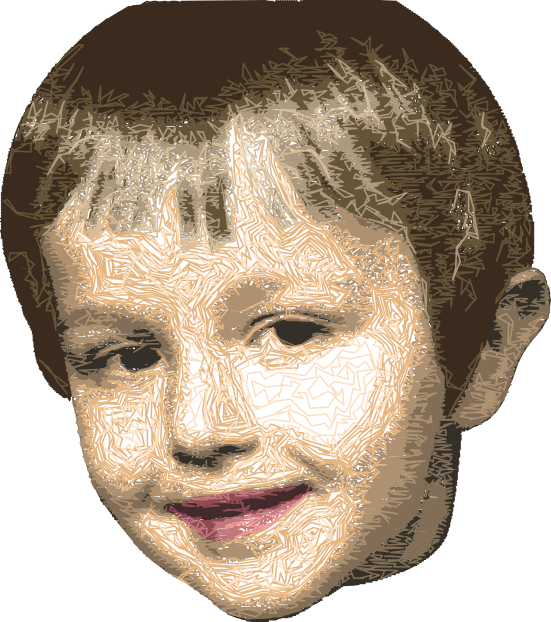
Generate stitches for all objects to complete the portrait. Save your work as a Studio *.EOF file to preserve the vector data. Finally, use Main Menu > Design > Compile and Put into Embird Modder to prepare the design for export into your machine's specific format. Finally, use Main Menu > Design > Compile and Put into Embird Editor to prepare the design for export into your machine's specific format.
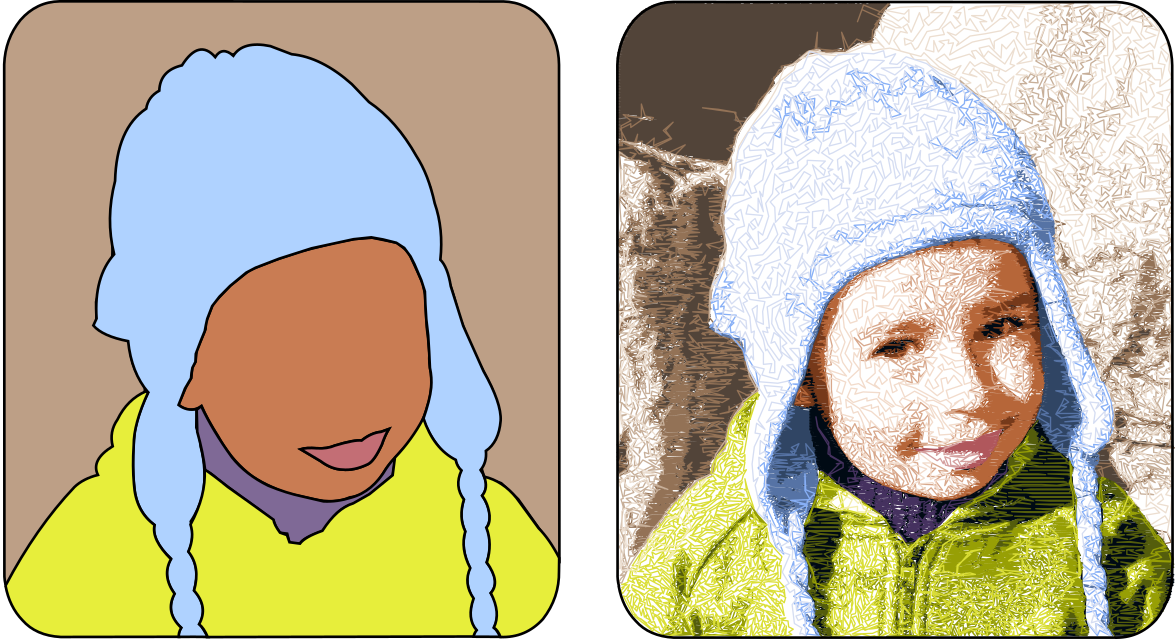
A complex multicolored design utilizing 6 basic colors and 22 thread shades (16.8 cm height).
This design consists of 6 vector objects. Each object features a customized number of shades based on its size; for example, the mouth is simplified, while the face and jacket utilize higher shade counts for depth.
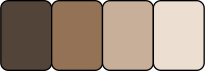
Background: 4 shades
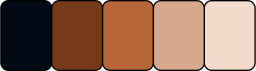
Face: 5 shades (includes a hole for the mouth)
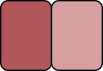
Mouth: 2 shades

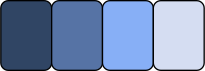
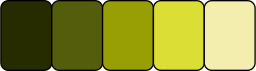
Sweater: 2 shades
Cap: 4 shades
Jacket: 5 shades
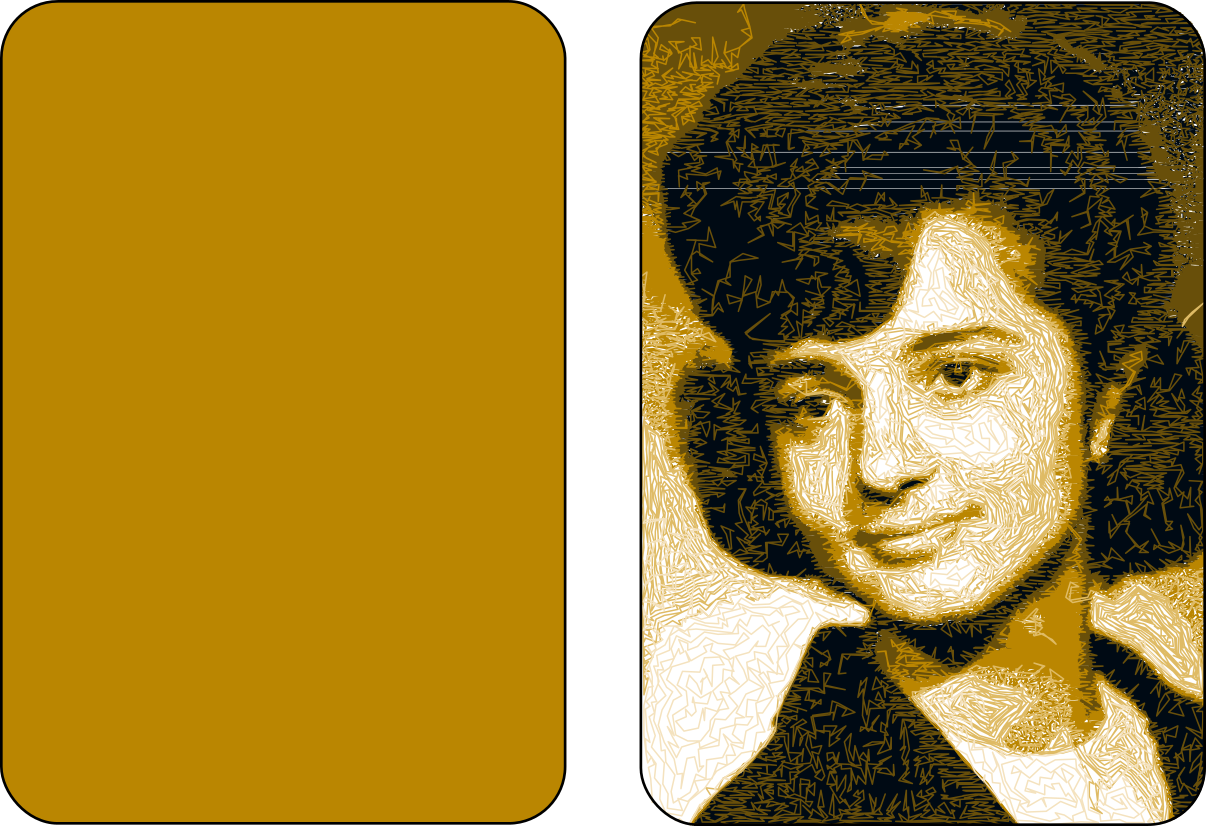
Sepia portrait (21.8 cm height) using 1 basic color and 5 thread shades.
This design uses a single rectangular vector object covering the entire photo. All 5 shades are automatically generated from the sepia basic color.

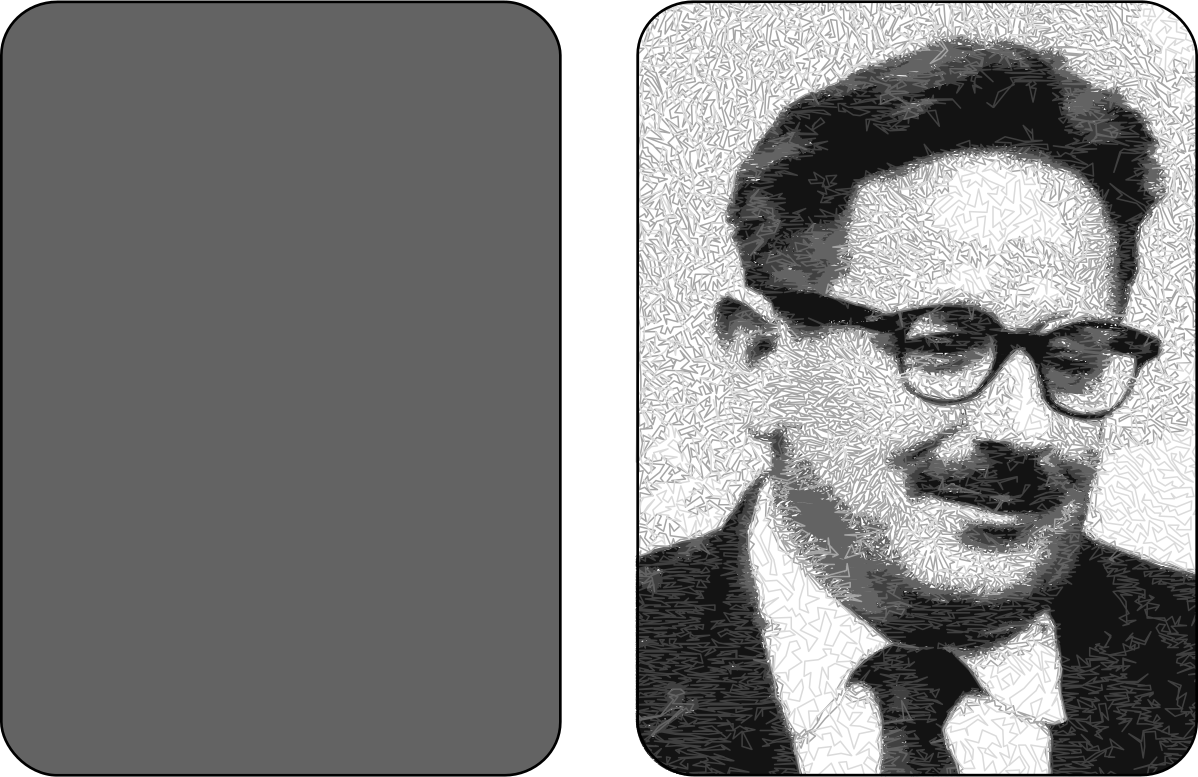
Grayscale portrait (20.8 cm height) using 1 basic color and 5 thread shades.
Like the sepia example, this utilizes one rectangular object with 5 shades generated from a neutral gray basic color.