

Navigate
Products
Download
eShop
Upgrade
Overview
Training
Support


Navigate
Products
Download
eShop
Upgrade
About
Training
Support


These commands apply to objects selected using the Transform Tool (arrow) or via the Objects Inspector. They serve to convert seleccted objects into different embroidery types including columns and editable stitches.
The Convert Menu is accessible only in select/transform mode.
Create Outlines generates an outline object from a selected solid area, such as a fill, mesh, or sfumato object. If the object contains openings, Studio also creates outlines for those openings as separate objects. The start point of each outline is identical to the start point of the corresponding parent solid-fill object or its opening. Since it is often preferable to start the outline where the solid fill ends, you may switch the outline to editing mode and use the "Place Start Point here" command from the pop-up menu to adjust the position.


Create Columns from Fill generates a complex object composed of columns and connections from a selected fill object. This is primarily intended for scenarios where the Auto Column option is used for a fill object, but more parameters are required than what Auto Column provides.

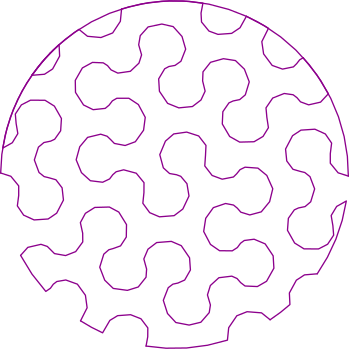
Create Outlines from Mesh.
If the mesh is multi-layered, this command creates a complex object composed of forward and backward outlines from the selected mesh.
This is useful when the user needs to manually edit mesh paths.
If the mesh is single-layered, it creates an object consisting of outlines and connections.
In this case, outlines are single-run (without a backward path), and any outline mode - such as satin stitch or samples - can be applied.
Create Separate Outline Elements from Mesh.
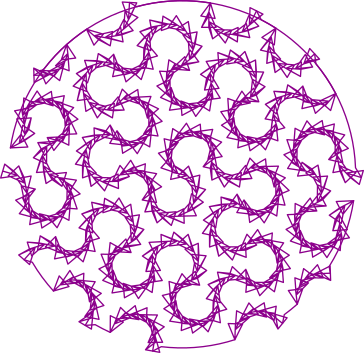
This command converts a mesh into individual outline elements.
If the mesh is multi-layered, the resulting outlines do not include backward paths and are not arranged in a continuous sequence.
If the mesh is single-layered, the resulting outlines are arranged in a continuous sequence joined by connections.
This command is intended for users requiring detailed editing of the generated mesh fill.
Create Column from Outlines generates a column object from a selected outline.

Split Border into Elements creates a complex object composed of columns, outlines, and/or connections from a selected outline object. This is useful for editing specific parts of a predefined border outline, such as a rope border.
Split Overlock into Elements creates a complex object composed of columns and/or connections from a selected outline object. This is intended for editing parts of a predefined overlock outline.
Create Fill from Opening creates a new fill object from a selected opening within an existing fill. The opening must be selected in the Parts Inspector window. This command is useful when creating cover stitches of a different color for a hole (opening) in the fill. The newly created fill object should be adjusted to overlap the opening slightly, creating an overlay to prevent gaps during stitching.

Create Fill from Outline creates a new fill object from selected outline objects. If the outline is open, Studio automatically closes the newly created fill object.
Split Appliqué into Layers generates separately editable layers from selected appliqué objects. These layers include: 1. marking stitches (outline objects), 2. tack-down stitches (column objects), and 3. cover stitches (column objects).
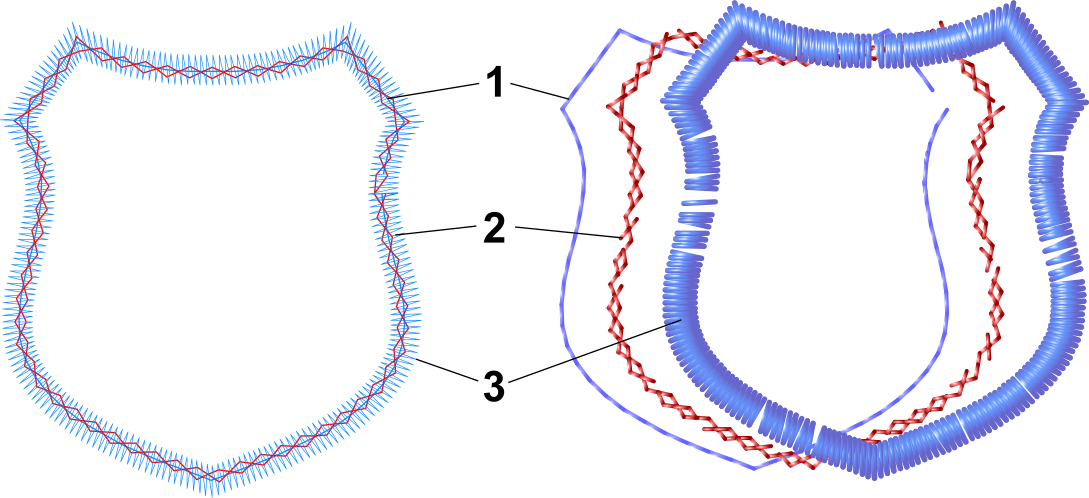
Left: Appliqué object with all layers. Right: Layers moved aside for clarity.
Note that the commands above duplicate the object before conversion. For instance, when using "Create Columns from Outlines," Studio duplicates the object, maintaining the original Outline object while converting the second into a Column object.
The following commands convert objects directly without duplication:
Each of these functions changes an object from one type to another.
Column to Appliqué joins the beginning and end of an object, as an Appliqué object must form a closed loop.
The functions Column to Outline and Column to Fill also convert Columns with Pattern and Appliqués into Outlines and Fills.

Column to Column with Pattern
Column with Pattern to Column
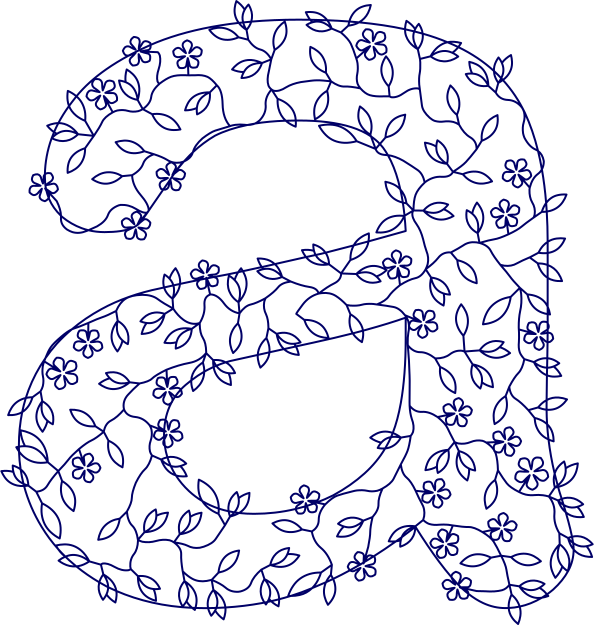
If the Font Engine module is installed, the Fill to Mesh command can be used to create intricate embroidery lettering from True Type and Open Type fonts.
Please ensure that the mesh object is large enough to render the mesh pattern clearly.
The specialized command Areas to Centerline allows for the creation of redwork objects from fill or column objects. The result is a set of outline elements which should be combined into a single outline object using the Main Menu > Build > Outlines > Arrange Outline Parts function. This is primarily used for creating redwork lettering.


The to Editable Stitches command converts stitches in selected vector objects into editable manual stitches. After creating an initial object, use this function to access and modify individual stitches. This is useful for the precise adjustment of motif fills, for example.