
Navigate
Products
Download
eShop
Upgrade
Overview
Training
Support


Navigate
Products
Download
eShop
Upgrade
About
Training
Support


The Sew Simulator in Studio is a vital tool for analyzing the stitch order of a design by providing a real-time animation of the embroidery process. This simulation is frequently used to identify unnecessary trims between objects or to inspect technical details such as underlay and complex stitch structures that may be difficult to discern in a static rendering.
The Sew Simulator can be accessed via Main Menu > Gadgets > Sew Simulator or by clicking the dedicated button located in the splitter panel.
To run the simulator, one or more objects must be selected in the Work Area, and these objects must have generated stitches.
The simulation can be terminated at any time by pressing the ESC key or clicking the Stop button.
The Rendering mode can be toggled during the animation to provide different visual perspectives. Available modes include Flat, 3D, X-ray, and Normal.
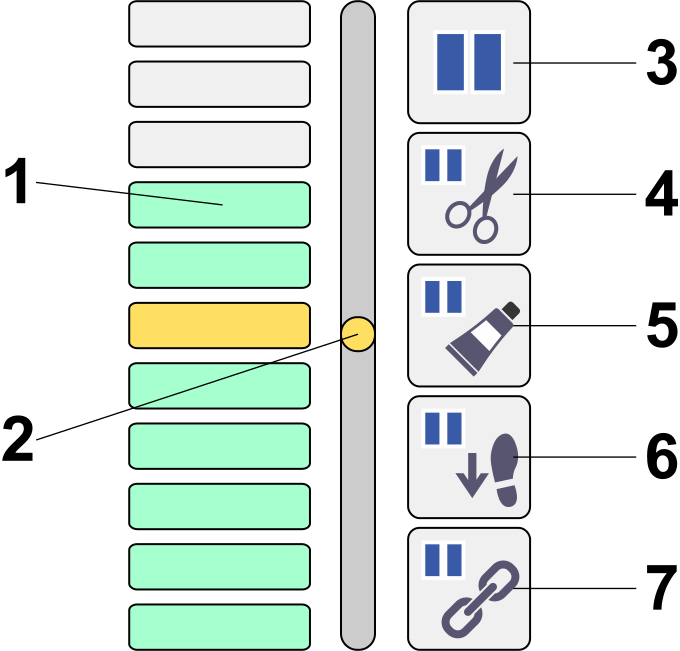
The functionality of the panel controls is as follows:
Note: Controls 1 and 2 support negative speed settings, causing stitches to gradually disappear from the view. By moving slider 2, you can manually scrub the simulation forward and backward. This feature is intended for a granular inspection of how specific segments of the design are constructed.
Buttons 4 through 7 allow you to set specific "event-based" pauses. When a button is toggled on (depressed), the simulation will automatically stop when that condition is met. For example, to audit thread color transitions or connection paths, enable buttons 5 and 7. Condition 6 is particularly effective for verifying the integrity of double-layered outlines. When a pause occurs, simply click button 3 to continue.
The Work Area zoom and scroll controls remain active during simulation, allowing you to maintain focus on specific areas of interest as they are being "sewn."
The color bar at the top of the interface provides a timeline to rewind or fast-forward the simulation. Colored rectangles represent the current thread color, while small black ticks indicate object boundaries. To navigate, click and hold the primary mouse button on the color bar and drag the slider left (backward) or right (forward). Release the mouse button to resume normal playback from the new position.
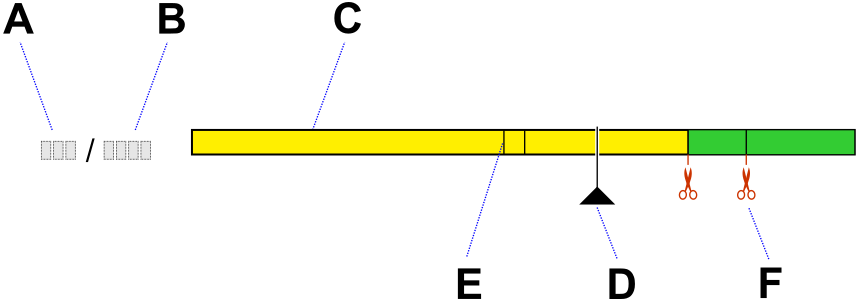
The components of the progress bar are defined as follows: