

Navigate
Products
Download
eShop
Upgrade
Overview
Training
Support


Navigate
Products
Download
eShop
Upgrade
About
Training
Support


These parameters apply exclusively to selected Appliqué objects.
This page details the parameters for Appliqué objects within Embird Studio NEXT. It explains the three essential stitch layers required for appliqué creation - mark-up, tack-down, and cover stitches - and defines their specific roles in the embroidery process.
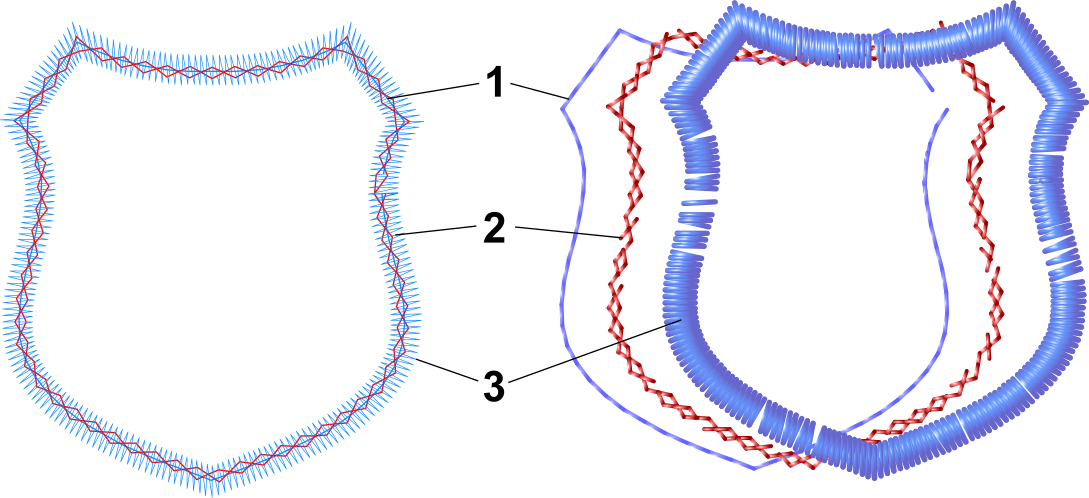
Left: Appliqué object with all layers visible. Right: Layers separated to provide a clearer view of the structure.
Layer 1 consists of mark-up stitches. Their purpose is to indicate the precise placement of the fabric patch on the backing material.
Layer 2 consists of tack-down stitches, which secure the appliqué fabric to the backing material. These are assigned a unique color to prompt the embroidery machine to stop both before and after the layer is stitched. The pause before the tack-down stitches allows the user to place the fabric onto the marked area. Once the tack-down stitches fix the patch in place, the subsequent pause allows the user to trim the excess fabric along the stitch line.
Layer 3 consists of cover stitches. These stitches overlap and conceal the tack-down stitches and the raw edges of the appliqué fabric.
Note: Unlike Column objects, Appliqué objects do not support gradient effects or strips fill.
Most appliqué parameters are a subset of the Column object parameters.
Color of Tack-Down Stitches. Tack-down stitches are intentionally assigned a different color from the mark-up and cover stitches. In embroidery design, a color change functions as a command for the machine to pause, allowing for manual operations such as trimming fabric. The specific thread color selected in the software is less critical than the pause triggered by the color change itself.
Tack-Down Width. This defines the width of the zig-zag path used for the tack-down stitch.
Tack-Down Stitch Spacing. This controls the density or distance between the zig-zags along the tack-down path.
Tack-Down Corners. This setting determines how the software processes sharp corners on the tack-down path, such as whether the zig-zag forms a sharp, rounded, or chamfered transition.
Tack-Down Offset. The primary function of the tack-down offset is to make the tack-down stitch slightly smaller than the final cover stitch. This ensures that after the excess fabric is trimmed close to the tack-down line, the raw edges remain positioned inward. This allow the final cover stitch to fully encapsulate and hide the fabric edges.